

The Giant Slug
Instead of dragons, everyone uses dragons.

“It is important to remember that, as a mythical creature, dragons do not actually exist, and there is no need to worry about how to deal with them in real life.”
- A.I.
Why is it that “fearful dragons” are in every fantasy story?
I get it, they’re easy to use to convey all sorts of emotions to the reader/viewer from terror to power to selfishness.
I fed a prompt into several AI chatbots to ask them “How to deal with dragons” and they all gave that same answer that I quoted above. Folks, I think we’ll be ok in the fight against artificial intelligence when it can’t even understand the context of a prompt.
A human therapist might have asked me “Ok, what kind of dragons are you dealing with today?” And assume I’m talking about my ‘inner dragons’ or ‘inner demons’ as so many people figuratively put it for their therapy sessions. But I digress… back to slugs.
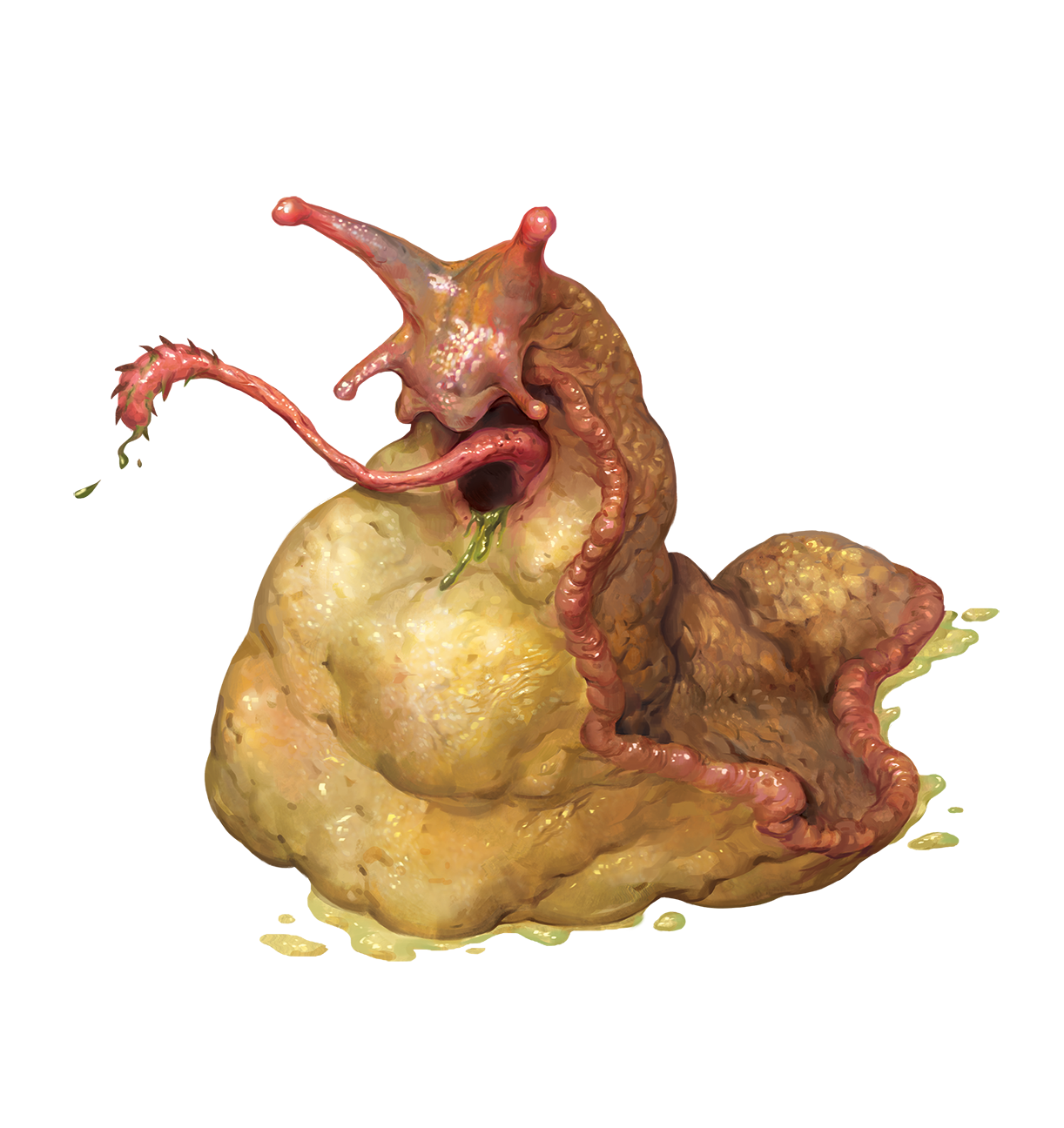
In an effort to entice the Biologists out there; let’s use a Giant Slug for this analogy instead of dragons. I’d love to read a comment like “that’s not how slugs work” or something like that. Engage with the content, I’m a real person out here!
So why do I keep talking about slugs? We all know about them but no one really cares about them in any specific way. Think about it. They’re not necessarily threatening, fast, or even remotely predatory. Unless you’re a slug fan or biologist chances are you don’t have a lot of in-depth knowledge about them. They’re in most gardens, they’re portrayed cutely on animated movies like Bug’s Life, and they’re slimy. That’s about it right? Not much reason for slugs to hold a lot of space in your thoughts.
Therefore, we all generally ‘know’ about slugs but how much do we really KNOW about slugs? The key here is that we all know they actually DO exist. This is enough to make my point which is:
What would you do if you had a giant barn-sized slug lounging in a field by your house?
You might think this is meant to be funny, but really sit and think about how the world is structure around you. What questions would you be asking yourself in that situation?
When you think of the giant slug in a very real way, it should prompt all sorts of analytical problem-solving questions to ask yourself:
Fun Fact: Slugs leave a slimy trail behind them, that helps them move more easily and trace their steps back home.
How would that look if you had a field full of slug slime killing all your crops?
What about the giant slug itself eating all your crops?
Would you approach it and try to kill it?
Can it even be killed?
What if you cut it and the blood is acid?
What if it attacks?
Would you try to lead it away, making it someone else’s problem?
Fun Fact: Slugs can regenerate their damaged body parts, including their tentacles and parts of their body.
This means a giant slug could likely be hard to kill
Will it become aggressive after you attack it?
Would you enlist help from family, friends, and neighbors?
How strong is a giant slug’s tentacles? Can they grab onto you forever?
Fun Fact: Slugs are hermaphrodites, meaning that they have both male and female reproductive organs. They can breed with any other slug they come across.
What happens if the giant slug reproduces?
How many giant slugs will come from one big one?
Can the giant slug be trained?
Is it friendly? Adaptable?
Now you might be thinking “There’s no such thing as giant slugs” or “these questions are stupid” but hopefully you see that the ‘Giant Slug’ is simply an analogy for all the kinds of problems you perceive in your life.
Are you asking yourself the right kinds of questions when approaching your life’s problems that might just seem too big to deal with?
Once you change your mindset, the landscape of your life begins to change with it. Sometimes immediately.
“The problem is not the problem. The problem is your attitude about the problem.”
- Captain Jack Sparrow
We all have our own ‘Giant Slugs’ in life.
The key is how you approach the giant slug and what mindset you have when addressing the problem.
Think of all the examples of accidental discoveries that benefited the world. Penicillin, for example, has helped millions of people around the world. Here’s a few notable facts about it:
There are a number of penicillin types that help to counter bacterias
Amoxicillin that helps clear infections, is a penicillin!
Penicillin works by destroying bacteria cell walls and breaking them down efficiently without harming the body, killing them without killing other cells
It’s agreeable to say that Penicillin was Dr. Alexander Fleming’s most notable contribution to science and he discovered it by accident, coming back from holiday to find a mould growing on a petri dish. Can you imagine how different your life would be without simple antibiotics that help break down bacterial infections in your body? Can you imagine walking into a lab after a long holiday, to see a whole mess of mold and fungus growing on your lab equipment? What of the contamination?
What if he had simply thrown it all away? Only seeing ‘the problem’ before him?
If Dr. Fleming had simply looked at the fungus as a problem and thrown out his petri dishes, or ignored them or wiped them clean I can only imagine how different things would be for all of us today.
I believe it all comes down to the mindset you have when attempting to deal with the problems you face. As Captain Jack Sparrow says “The problem is not the problem.”
I would add that sometimes perhaps there is no problem at all.
A positive outlook and expectation of positive results will have a positive outcome just as a negative one will be negative.

Final Thoughts:
Break it down, Step by step. Small steps lead to greater improvement.
You don’t have to kill the giant slug in one day. If you try to break down your problems into smaller and smaller pieces and address them little by little, you can make the giant problem not feel so giant. Here are some ways I’ve tried to take control of the ‘giant slugs’ in my life:
Take yourself seriously in your personal life just as you do in your job or career
Set goals by date and deliver on them for yourself
Write down your dreams, ideas, plans in an actual action plan with steps
Put sticky notes where you can see them daily, set reminders
Task Manage your life:
Use an app like Asana, Trello, or other free software to plan your tasks
Set a daily, weekly, and monthly time to organize your tasks - sit down with a cup of coffee, tea, or water and update and clean up your completed tasks and upcoming ones
Add calendar events for important tasks
Get an accountability partner
Have friends who seek to achieve the same goals?
Set goals together, set benchmarks to check in with each other
Milestones of achievement that you can celebrate together
Thanks for hanging in there with me on this analogy. I hope you’ve found any of this useful or encouraging.
Have some other ideas on how to battle those ‘giant slugs’ in your life? Comment below! Want to comment or yell at me? Leave a comment at the end of this SubStack!
Let’s Talk.
Love,

Love your creative mind!